
What Is Screen Printing? (And Why It’s Not Just “Click and Print”)
By Abante Marketing
Screen printing is one of the most common and durable methods for decorating apparel—but most people don’t actually know what it involves. If you think we just upload your logo, hit print, and shirts pop out the other side… let’s peel back the curtain.
Screen Printing 101: It’s All About the Screens
At its core, screen printing is a manual process. Each color in your design gets its own screen—which is basically a mesh stencil that controls where ink hits the shirt. So if your logo has 4 colors? That’s 4 separate screens.
And here’s what has to happen for every one of them:
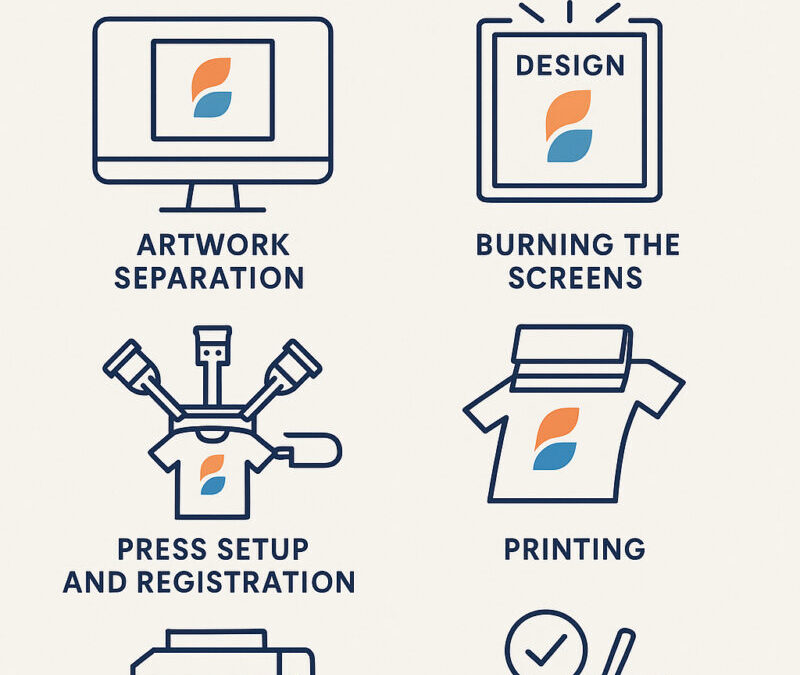
Step 1: Artwork Separation
Before anything hits a shirt, we separate your logo or design by color using specialized software. A 3-color logo means three layers—each one isolated in black and white so it can be burned onto a screen.
Step 2: Burning the Screens
Each color layer is printed onto a transparent film, which is then laid over a coated screen. That screen gets exposed to light (like developing film), hardening everything except where the black design blocks the light. The result? A stencil for one color of your design, where ink can pass through.
Repeat this for every color. (Yes, manually.)
Step 3: Press Setup and Registration
The screens are loaded onto a printing press—each in a specific spot. Here’s the tricky part: they all have to align perfectly so your logo doesn’t look like a jumbled mess. This alignment process is called registration, and it takes time and experience to get it right, especially for multi-color or full-front designs.
Step 4: Printing (Finally)
With the screens in place, ink is pushed through the mesh using a squeegee—either by hand or via an automatic press—onto the garment. Each shirt gets printed one color at a time. Color 1 goes down, then the press spins, and color 2 gets applied… and so on.
Step 5: Curing the Ink
Fresh ink isn’t ready to wear. It has to be cured—usually in a big industrial dryer—to set it properly. This ensures it won’t crack, peel, or wash out.
Step 6: Quality Checks and Cleanup
We check every run for accuracy, alignment, and color consistency. Then we clean the screens, reclaim them for reuse, and prep for the next job.
So… Why Does It Matter?
Because screen printing isn’t instant—and setup is a big part of the cost.
A one-color design on 100 shirts? Easy.
A six-color design with front and back prints on 24 shirts? That’s double the setup time and materials… for fewer shirts.
Knowing how screen printing works helps explain:
- Why multi-color or low-quantity runs cost more
- Why vector artwork matters (clean edges = clean screens)
- Why you can’t just swap colors or logos last-minute without extra charges
- And why companies with in-house production (like us 👋) can control quality way better than those who outsource
Bottom Line:
Screen printing is equal parts art and science. It’s physical, hands-on, and takes real skill to do well. When it’s done right, though? It’s vibrant, durable, and looks sharp wash after wash.
Got a design you’re thinking about printing?
We’re happy to walk you through it—and even show you the process in action if you’re local. Just drop us a line!

Recent Comments